AI5 min readBy JH Akash
Claude Opus 5.5: The Greatest AI Model Ever Released? (Video Breakdown + Benchmarks)
Anthropic's Claude Opus 5.5 is smarter, faster, and 40% cheaper than Opus 5. Full breakdown of Alex Finn's 'greatest AI model ever' video, with verified benchmarks and charts.
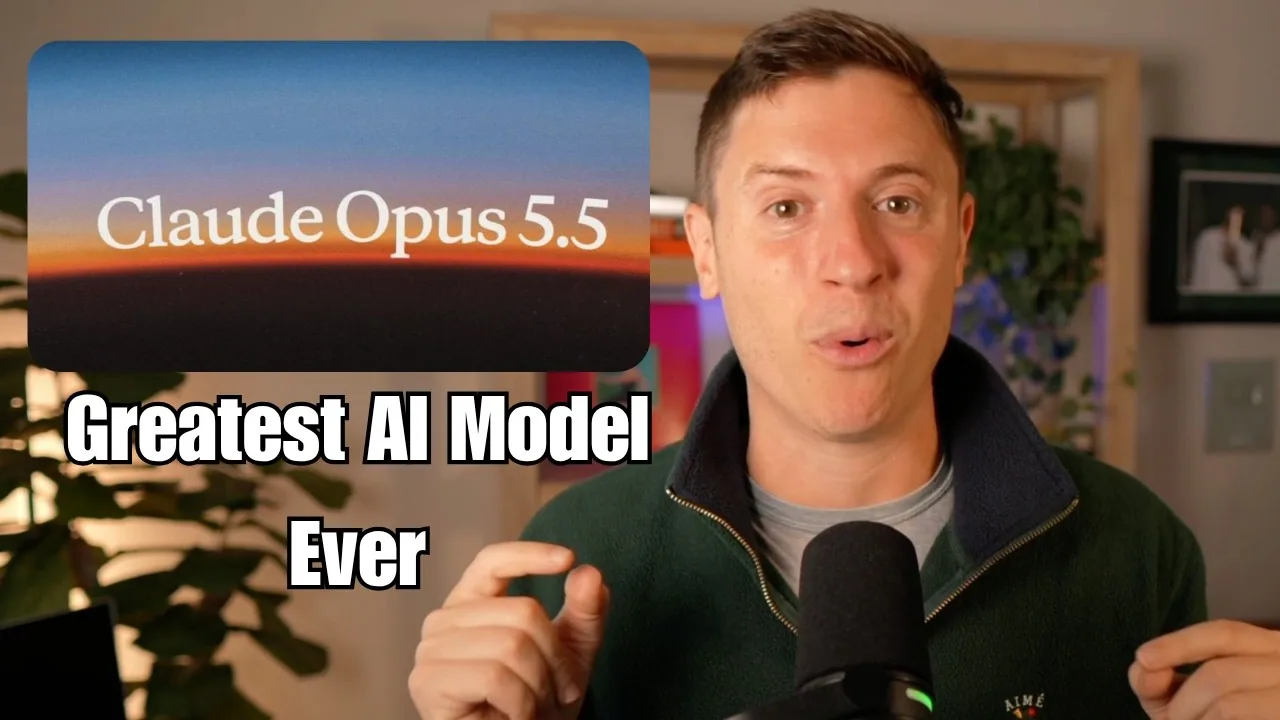
Anthropic released Claude Opus 5.5 on September 22, 2026, and one video is doing the rounds with a bold claim: it is the greatest AI model ever released.
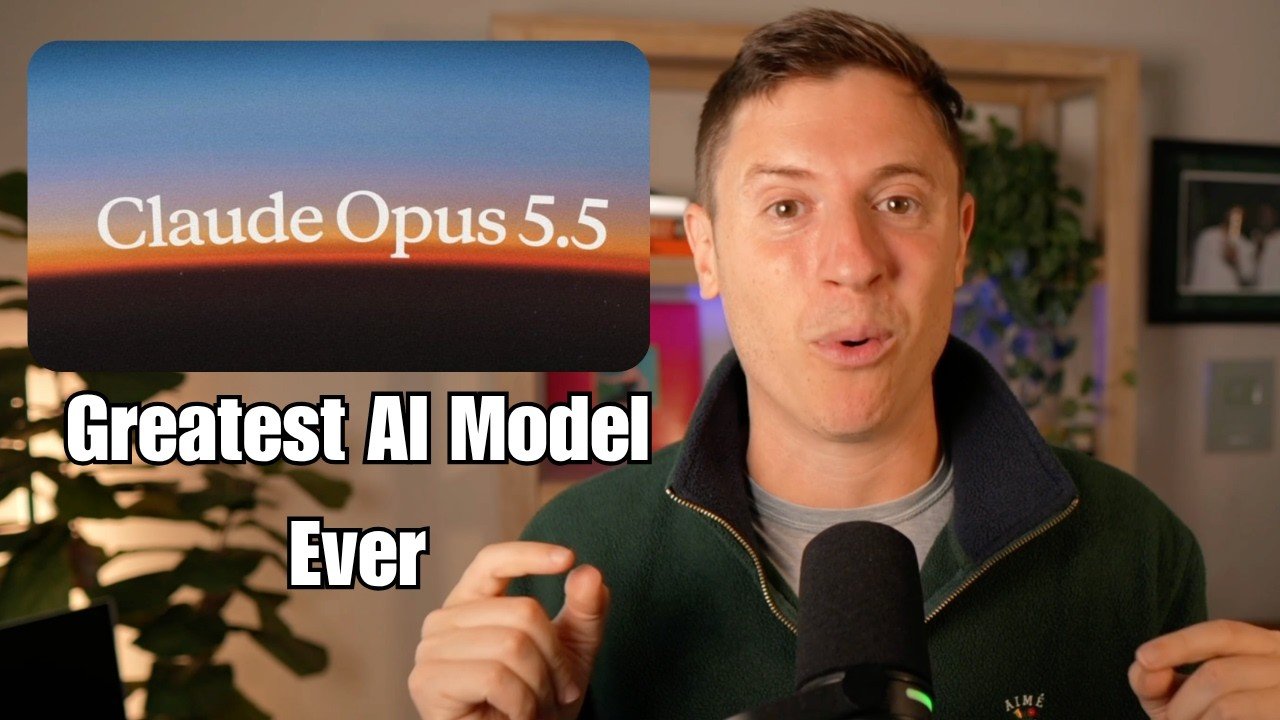
The video comes from YouTuber Alex Finn, who got early access to the model and tested it for days before launch. His verdict after the embargo lifted: Opus 5.5 is smarter than every other model out there, faster than all of them, and somehow cheaper too. Here is the full breakdown of what he found, with the verified specs and benchmarks behind the hype.
The early access story
Anthropic handed Finn the model without telling him its name. He assumed it was some kind of Sonnet 5.2, because the leap over his Sonnet results was that dramatic. When Anthropic told him it was actually Opus 5.5, he did not believe it at first. In his words, he had never seen Opus this fast, and the intelligence gap over everything else was not even close.
The trifecta: smarter, faster, cheaper
Finn's core argument is what he calls the trifecta. Opus 5.5 is best in class on all three at once, which he says you almost never see.
1. Smarter. On Anthropic's launch charts, Opus 5.5 running on its high setting beats every other model running on max. The independent numbers back it up. On Terminal-Bench 4.0, the agentic coding benchmark, Opus 5.5 scores 66.4%, ahead of GPT-6 Astra at 57.9% and Claude Fable 5.1 at 55.8%.
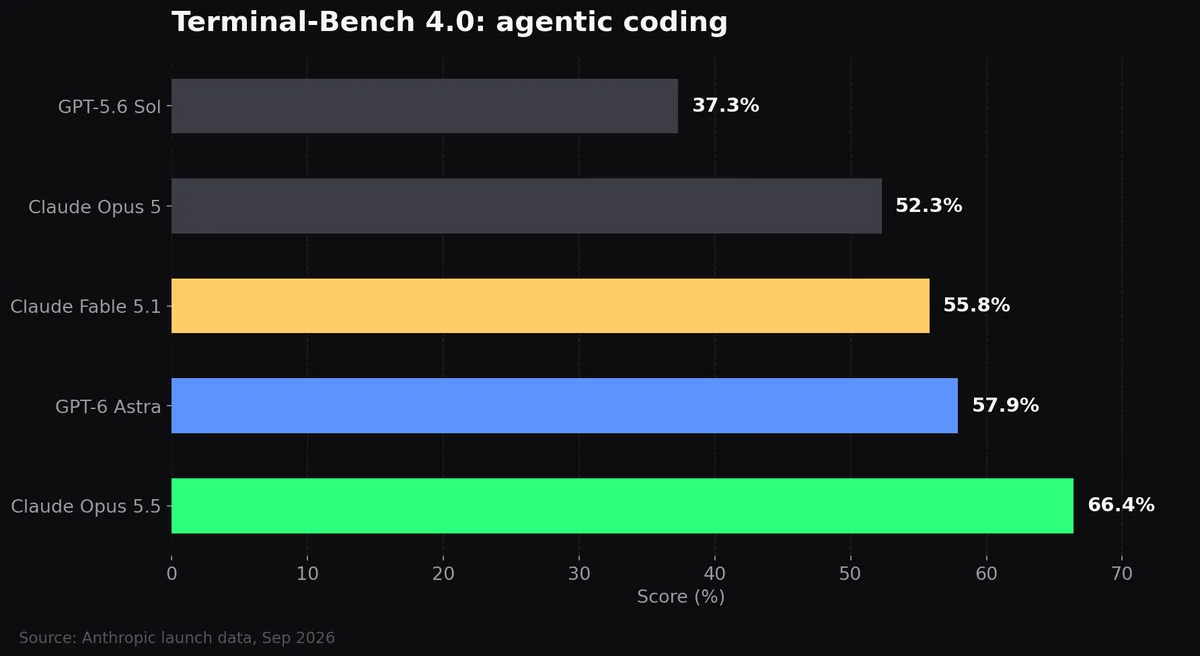
It also posts 54.4% on FrontierCode v1.1, 67.7% on Humanity's Last Exam with tools, and 81.8% on OSWorld 2.0 (partial), all state of the art at launch.
2. Faster. Finn says it feels zippier than every previous Opus model, and faster than the GPT and ChatGPT models too. Anthropic reports roughly 30% faster output generation than Opus 5.
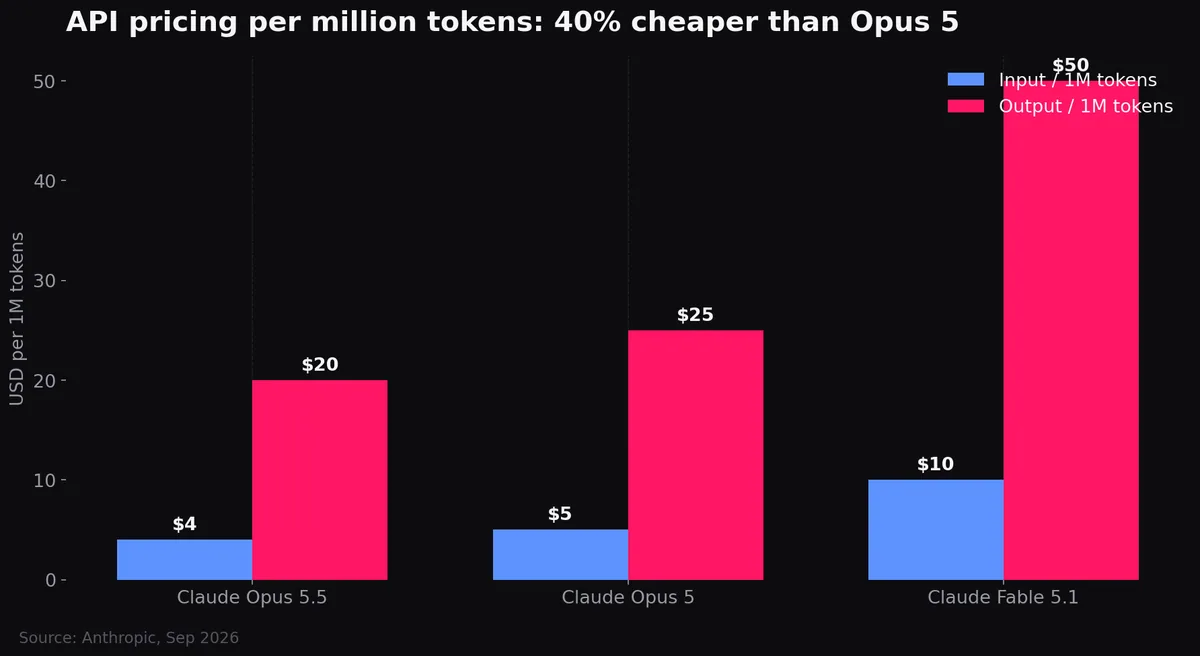
3. Cheaper. This surprised him most. Anthropic cut the list price to $4 per million input tokens and $20 per million output tokens, down from $5 and $25 on Opus 5. That is 20% cheaper per token, and Anthropic says typical workloads cost about 40% less overall because the model is also more efficient.
Finn's read on the strategy: if the model is this good, people will simply use it far more, so lower prices still mean more revenue. Consumer friendly and company friendly at the same time.
The best part: it talks like a human again
Finn says the best part of the model is not the benchmarks. It is the personality.
His complaint will sound familiar to heavy AI users. Every model released since about May 2026, from every company, became unbearable to talk to: strange jargon, paragraphs that never end, and when you finish reading you wonder what you just read. Anthropic's own models lost the warm, concise, human feel that made people love talking to them in the first place.
Opus 5.5 brings it back. In his live demo, the model reported test results the way a person would: what it built, what improved, clean tables that are easy to scan. No corporate robot speak. Finn rates it as good as, or better to talk to than Opus 4.5 and the original Sonnet 3.5, his longtime favorites for conversation.
The demos: debugging and a full game in five prompts
Debugging. Finn handed Opus 5.5 code generated by other models and just asked it to improve things. Without even being asked to debug, it found issue after issue in code from GPT-6 Astra and others.
A 3D extraction shooter in about five prompts. The showpiece: a full top-down 3D extraction shooter with a weapon inventory system, a map with multiple locations, enemies, loot, and a working extraction mechanic. More depth than he got out of Astra, with very few bugs.
Novel ideas. Finn uses AI for brainstorming and calls Opus 5.5 the best model ever for it. Two examples from the video: ideas for his new Apple Watch Ultra 4, where the model designed an app concept for seeing and talking to his AI agents from his wrist with no phone needed, and creative uses for a rack of 17 computers he has lying around.
The honest downside
Finn is upfront about one weakness. The Claude Code harness still is not as feature rich as ChatGPT's harness, and Claude's voice mode is not as good as ChatGPT's voice mode yet. His take: the model itself is so good you should use it anyway, and he expects Anthropic to close the harness gap soon.
Claude Opus 5.5 specs at a glance
- Model ID: claude-opus-5-5
- Released: September 22, 2026
- Context window: 1 million tokens
- Max output: 128K tokens
- Knowledge cutoff: June 2026
- Pricing: $4 input / $20 output per 1M tokens (cache reads $0.20 per 1M)
- Available on: Claude API, Amazon Bedrock, Google Cloud, Microsoft Foundry
How to use it
Opus 5.5 is available through the Claude API under the model ID claude-opus-5-5, and through Anthropic's cloud partners: Amazon Bedrock, Google Cloud, and Microsoft Foundry. If you are on a Claude Pro or Team plan, check your model picker, since Anthropic typically rolls new Opus models into the apps alongside the API.
Using the model through the API is the easy part. Turning it into a governed business workflow takes architecture, permissions, and human approval, which is what our guide to AI agent development services covers.
Watch the original video
FAQ
Is Claude Opus 5.5 really better than GPT-6 Astra? On agentic coding benchmarks, yes. Terminal-Bench 4.0 puts Opus 5.5 at 66.4% versus 57.9% for GPT-6 Astra. Finn's hands-on testing agreed: it found bugs in Astra-generated code without being asked.
How much cheaper is Opus 5.5 than Opus 5? List prices dropped 20% per token ($5 to $4 input, $25 to $20 output). Anthropic says typical workloads cost about 40% less overall because the model is also more efficient with its tokens.
What is the context window of Claude Opus 5.5? 1 million tokens of context, with up to 128K tokens of output in a single response.
Should I switch from Fable 5.1 to Opus 5.5? If you do agentic coding, debugging, or long autonomous runs, the numbers say yes. Opus 5.5 beats Fable 5.1 on benchmarks while costing less than half per token ($4/$20 vs $10/$50). The one reason to hold off: if you depend on ChatGPT's agent harness features or voice mode, those are still ahead of Claude's.
Want to put frontier AI to work in your business? CodeMyPixel builds custom AI agents, automations, and web platforms for growing teams. Talk to us about your project.
- Claude Opus 5.5
- Anthropic
- Claude
- GPT-6 Astra
- Claude Fable 5.1
- AI benchmarks
- AI coding
- LLM comparison
- AI news