AI8 min readBy JH Akash
LongCat 2.5 Explained: Meituan's 1.6T Multimodal Coding Model
Meituan's LongCat 2.5 went live Nov 2, 2026: 1.6T parameters, 1M context, native image and video input, at $0.30/$1.20 per million tokens. Benchmarks, price and the catches to know before you switch.
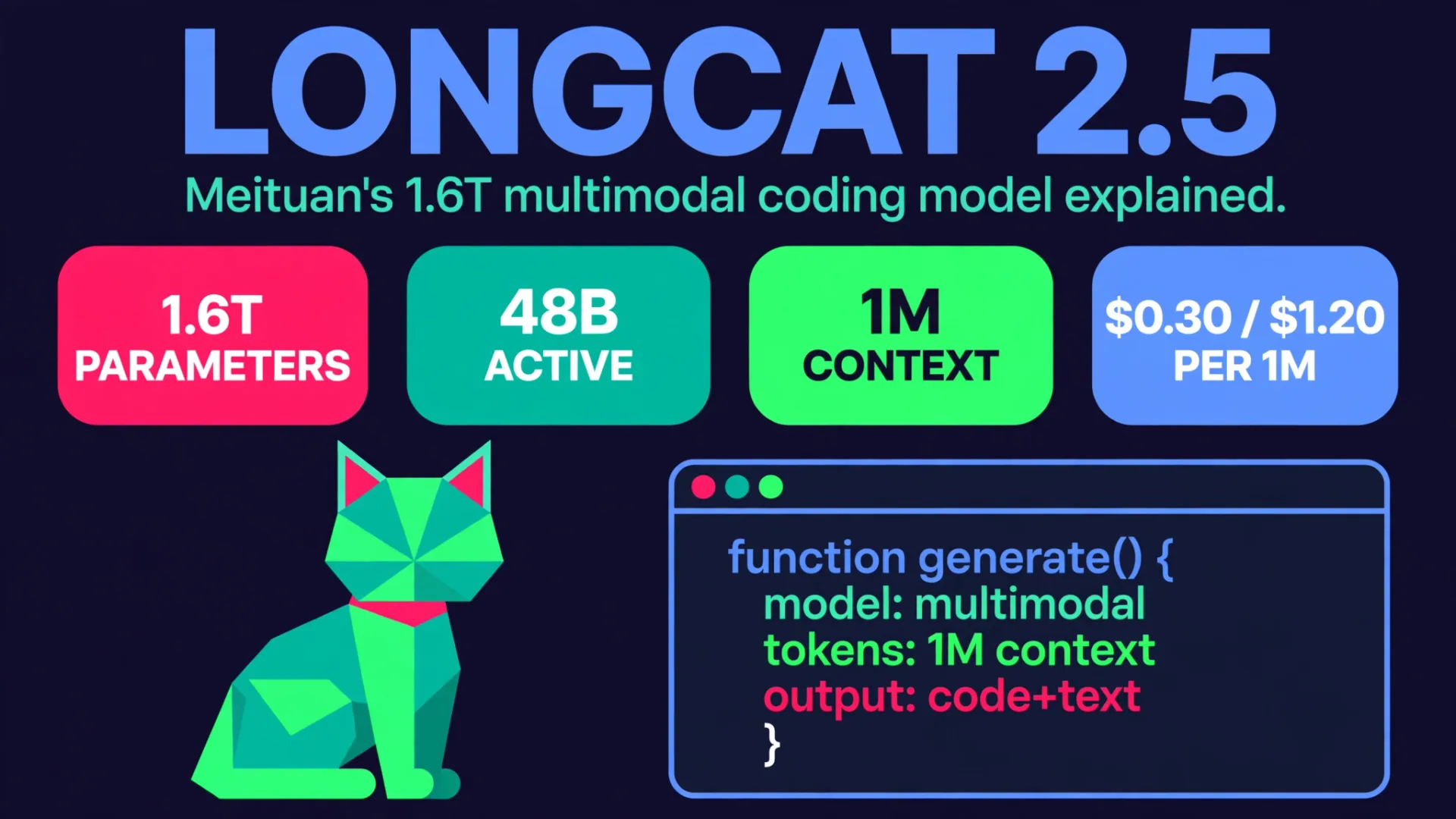
Meituan's LongCat team shipped LongCat 2.5 on November 2, 2026, and the pitch is easy to understand: a model that can read text, images and video, run long coding-agent jobs, and do it at $0.30 per million input tokens and $1.20 per million output tokens. The numbers underneath that pitch are more interesting than the headline. LongCat 2.5 is a big jump over LongCat 2.0, it matches DeepSeek V4.1 Flash on price, and its own benchmark table shows where a cheaper rival still leads on pure coding.
This is not a new, bigger model. LongCat 2.5 builds on LongCat 2.0, a 1.6 trillion parameter mixture-of-experts model with about 48 billion parameters active per token. The change is what the model can see and how much agent training it has had. All benchmark scores in this post are vendor-reported by Meituan unless stated otherwise, and no independent leaderboard had scored LongCat 2.5 at the time of writing.
Quick verdict
| Item | LongCat 2.5 |
|---|---|
| Released | November 2, 2026, general availability on the LongCat API Platform |
| Size | 1.6 trillion total parameters, about 48 billion active per token |
| Input | Text, images and video. Output is text only |
| Context | 1 million tokens. Plan around 128,000 tokens of max output |
| Price | $0.30 per million uncached input tokens, $0.006 per million cached input tokens, $1.20 per million output tokens, all labelled a limited-time discount |
| Weights | Not released. GitHub and Hugging Face are marked "coming soon" |
| Best for | Budget coding agents that need to read screenshots or screen recordings |
| Watch out for | No list price, no published data-retention policy, and no independent scores yet |
What changed from LongCat 2.0
LongCat 2.0 was text only and open weight, released under an MIT licence with weights on Hugging Face. LongCat 2.5 keeps the same 1.6T / 48B skeleton and adds native vision plus long-horizon agent training. The preview arrived on September 25, 2026, and general availability followed on November 2, 2026, adding video input and Codex support.
Vision is the headline feature. LongCat 2.5 turns pictures into discrete tokens in the same stream as words, instead of bolting an image encoder onto a text model. In practice, that means native resolution: a tall screenshot becomes more tokens rather than a squashed thumbnail. The docs allow up to 50 images per request at up to 10 MB each, and up to 10 videos at up to 100 MB each and under 3,600 seconds. There is no separate price line for images or video. You pay for the tokens they turn into.
On the agent side, Meituan describes large-scale long-horizon reinforcement learning on tasks built from filtered GitHub pull requests, with penalties for repetitive reasoning and repeated tool calls. That matters because looping on long tasks was the loudest complaint from preview users. Whether general availability fixed it is the first thing to test on your own repo.
LongCat 2.5 also works across agent harnesses, with guides for Claude Code, Codex, OpenCode, Cline, Kilo Code and Hermes Agent, among others. It supports OpenAI-compatible and Anthropic-compatible endpoints, so switching harnesses is mostly a base URL and model name change: LongCat-2.5.
Benchmarks: a real jump, with a catch
Meituan's own table shows a large jump over LongCat 2.0 on agent tasks. These are vendor-reported scores, run with thinking enabled.
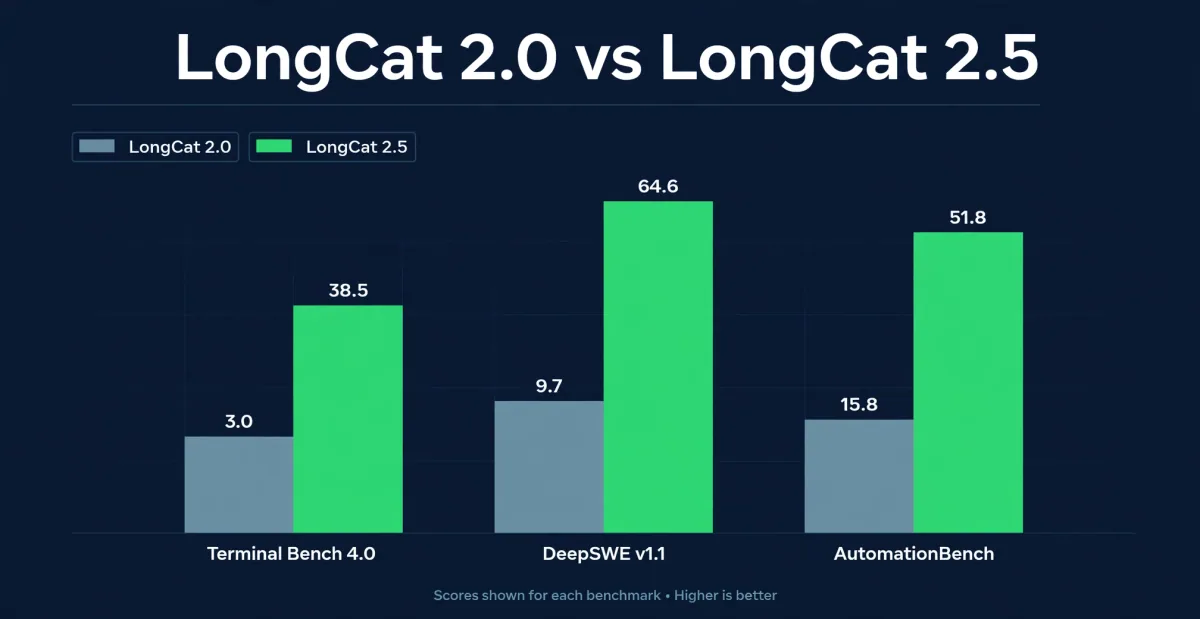
| Benchmark | LongCat 2.5 | LongCat 2.0 | DeepSeek V4.1 Flash | Kimi K3 | Claude Opus 5 |
|---|---|---|---|---|---|
| Terminal Bench v2.1 | 88.4 | 70.8 | 90.6 | 88.3 | 89.1 |
| Terminal Bench v4.0 | 38.5 | 3.0 | 31.2 | 12.6 | 53.9 |
| DeepSWE v1.1 | 64.6 | 9.7 | 74.2 | 67.5 | 68.8 |
| NL2Repo | 60.5 | 40.9 | 65.4 | 58.0 | 75.3 |
| BrowseComp | 91.9 | 79.9 | 91.5 | 91.2 | 90.8 |
| MCP Atlas | 83.1 | 61.8 | 84.4 | 84.2 | 85.8 |
| 3DCodeBench Text to 3D | 55.4 | Not reported | 53.4 | 49.3 | 54.3 |
| Vision2Web | 78.6 | Not reported | Not reported | 79.0 | 80.2 |
Source: Meituan LongCat 2.5 tech blog evaluation table. Scores for other models are a mix of Meituan's own runs and figures from public reports, which Meituan says are indicative only. Different benchmarks use different harnesses, so do not compare scores across benchmarks as if they were one ranking.
Read plainly, LongCat 2.5 leads its price rival on Terminal Bench 4.0 (38.5 against 31.2), BrowseComp (91.9 against 91.5) and 3DCodeBench Text to 3D (55.4 against 53.4). DeepSeek V4.1 Flash leads on Terminal Bench v2.1, DeepSWE v1.1, NL2Repo, MCP Atlas and AutomationBench (54.8 against 51.8). LongCat 2.5 is the one of the two with published video scores, and its BrowseComp and 3D results fit its vision-first pitch.
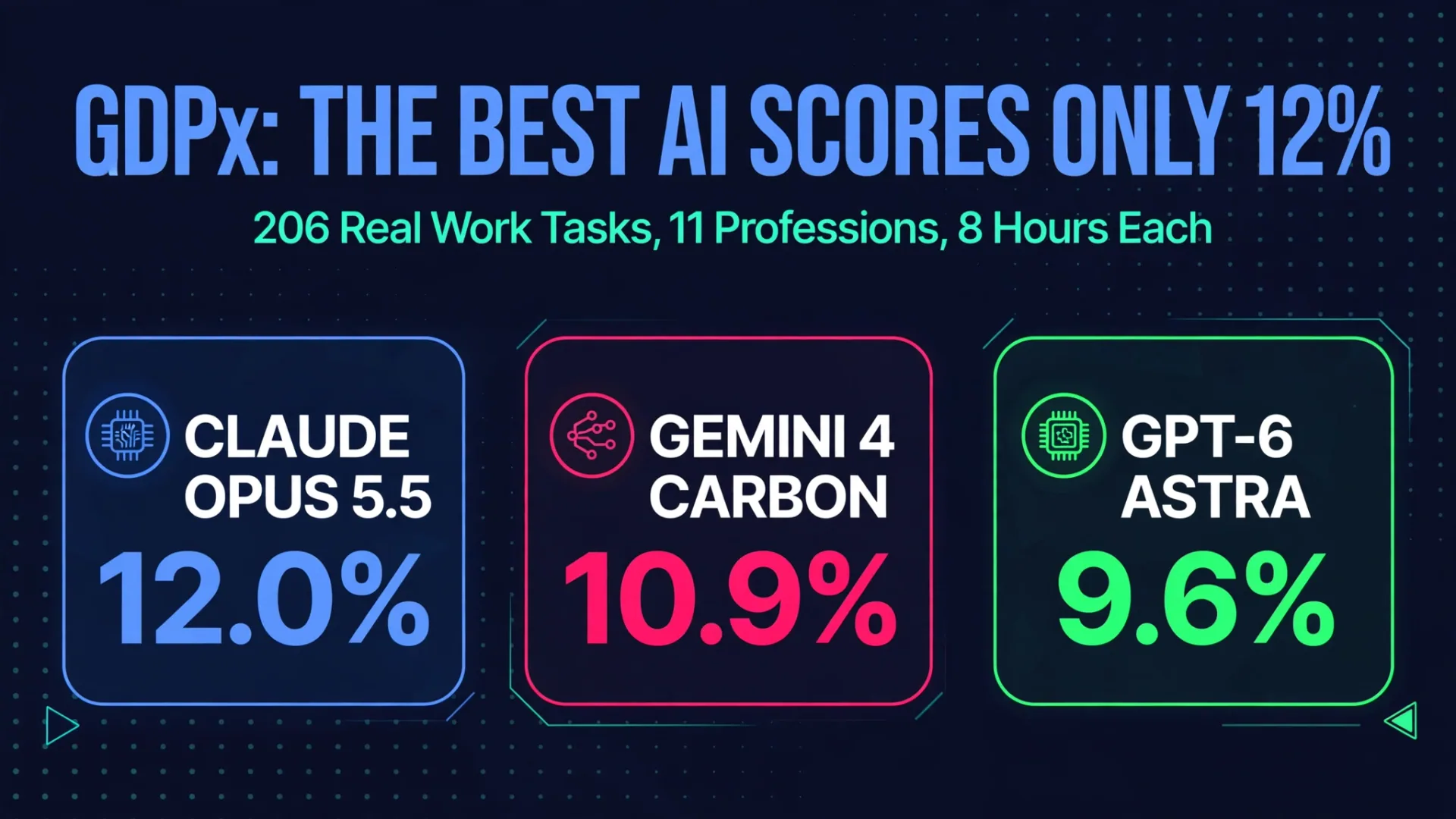
The comparison set is also worth noting. Meituan's headline charts compare against Claude Opus 5, GPT-5.6-Sol, Claude Opus 4.8 and GPT-5.5. They do not include Claude Opus 5.5, GPT-6.1 Sol or Kimi K3.1 Pro. For the newest frontier picture, see our earlier posts on Claude Opus 5.5 and GPT-6 Astra, and our GDPx benchmark breakdown, where Opus 5.5 leads at 12.0%.
Pricing: cheap, but discounted and temporary
| Model | Input per 1M tokens | Cached input per 1M tokens | Output per 1M tokens |
|---|---|---|---|
| LongCat 2.5, limited-time discount | $0.30 | $0.006 | $1.20 |
| DeepSeek V4.1 Flash, peak | $0.30 | $0.006 | $1.20 |
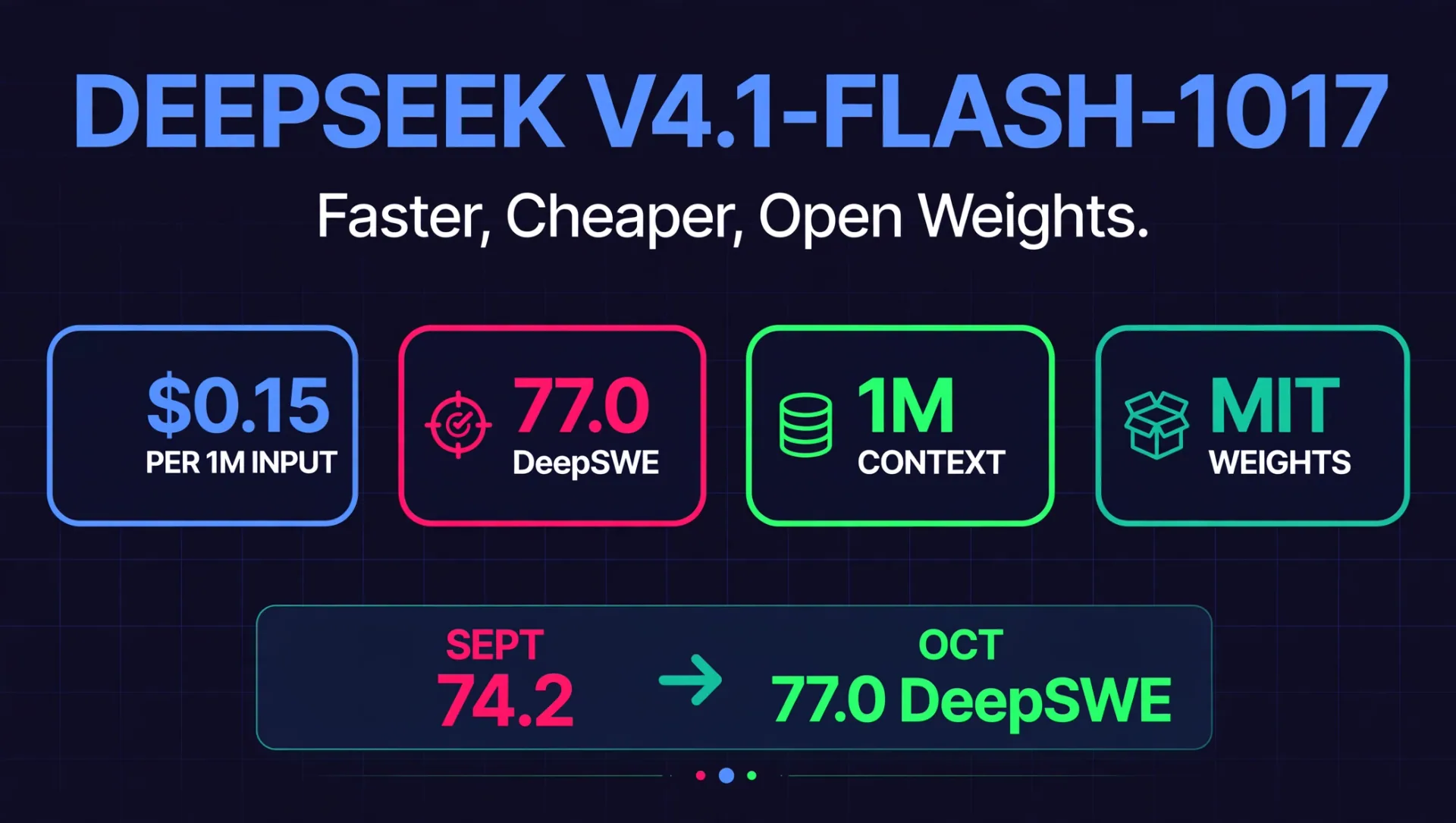
| DeepSeek V4.1 Flash, off-peak | $0.15 | $0.003 | $0.60 |
| Qwen 3.8 Max | $2.00 | $0.25 | $6.00 |
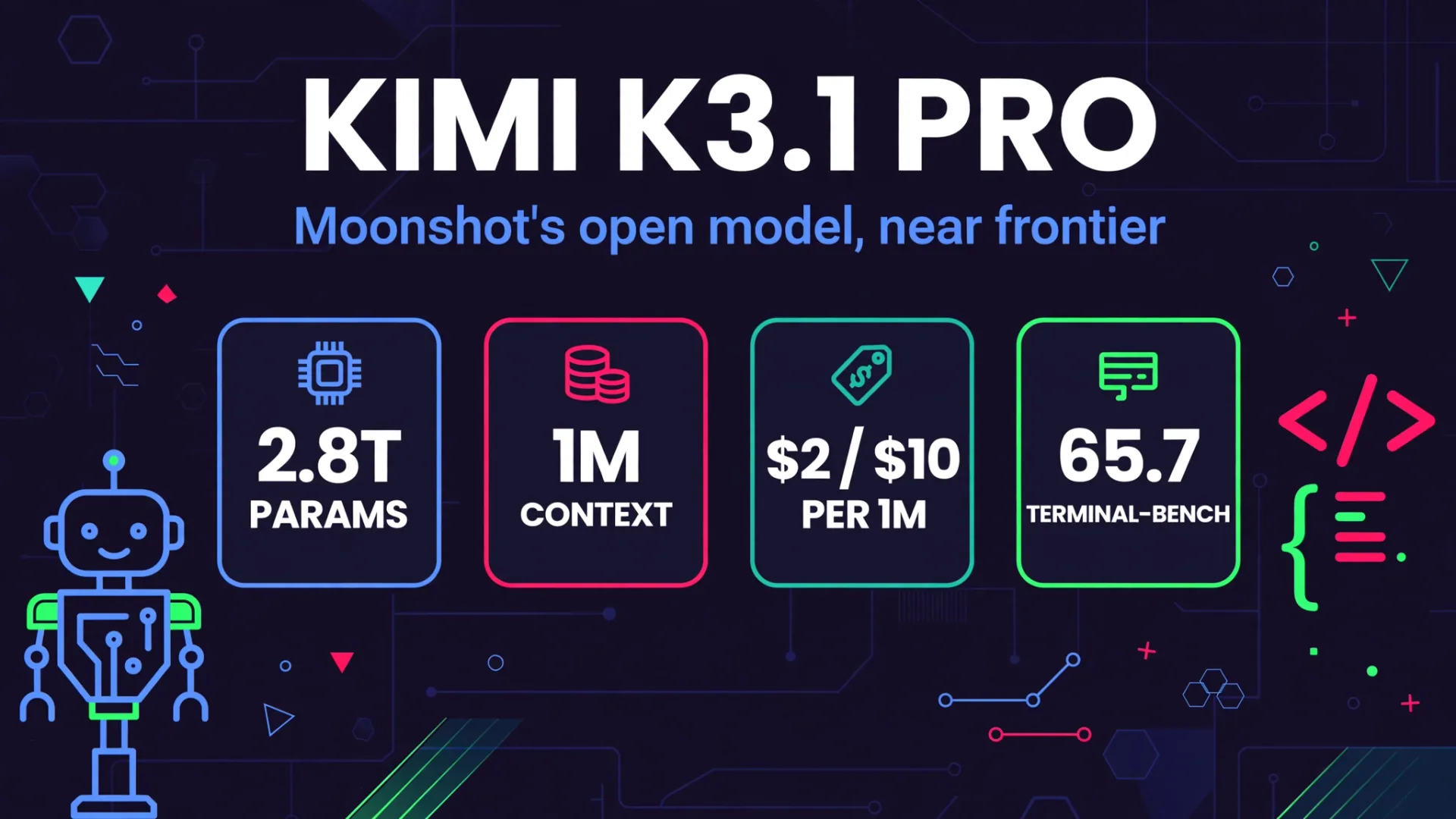
| Kimi K3.1 Pro | $2.00 | $0.20 | $10.00 |
| Kimi K3 | $3.00 | $0.30 | $15.00 |
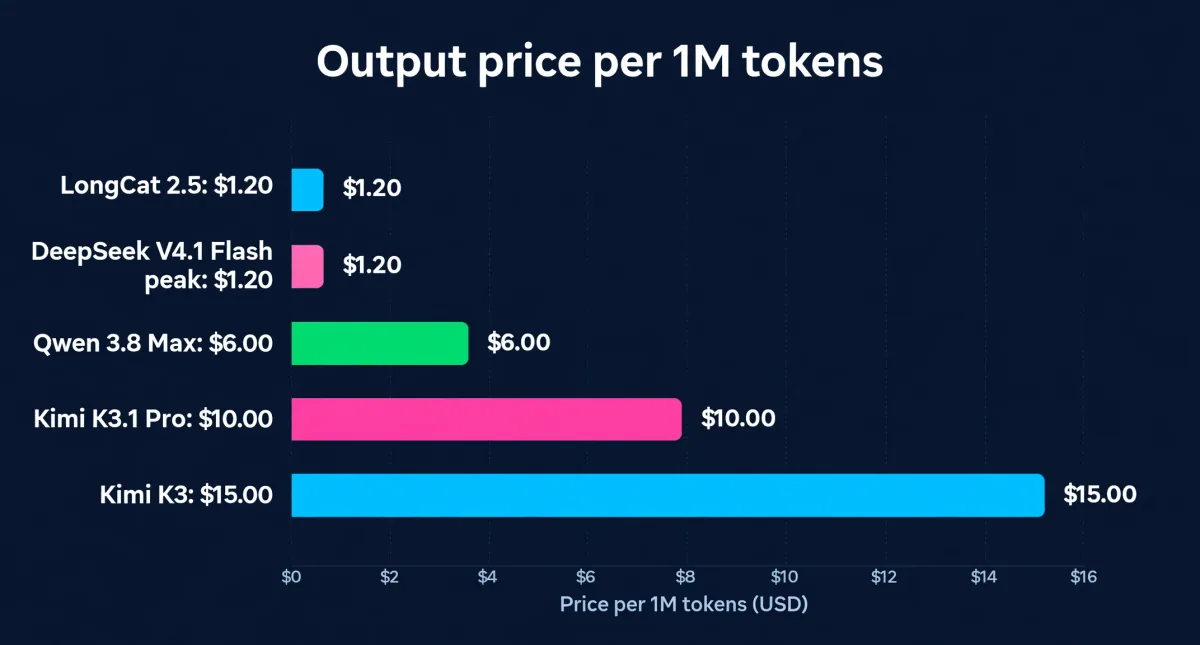
Two details make the price more useful than the headline. Cached input costs just 2% of uncached input, which matters for coding agents that resend the same files every turn. And there is no context-length surcharge, so a long request costs the same per token as a short one.
A simple bill helps. A task with 800,000 uncached input tokens and 200,000 output tokens costs $0.48 on LongCat 2.5: 0.8 times $0.30 plus 0.2 times $1.20. Meituan's own worked example, 600,000 uncached input tokens, 400,000 cached input tokens and 500,000 output tokens, costs $0.7824.
The risk is the discount label. Every LongCat 2.5 price carries the words "limited-time discount", with no list price and no end date published. An older LongCat 2.0 page showed a list price of $0.75 input, $0.015 cached and $2.95 output next to the same discount. Meituan has not said LongCat 2.5 will move to that list price, but budget on the discounted rate only if you can absorb a rise.
Which to pick
Try LongCat 2.5 if you run coding agents on a budget and want one that can read screenshots or screen recordings. At $0.30 / $1.20 with 2% cached input, an afternoon of testing on your own repo costs a few dollars. Compare it head to head with DeepSeek V4.1 Flash at the same price, on your own tasks, not on launch charts.
Pick DeepSeek V4.1 Flash instead if long-horizon coding is the whole job. On Meituan's own table it leads on more coding rows, and it halves its price off-peak. It also has longer max output in third-party comparisons, at 384,000 tokens against LongCat 2.5's planned 128,000.
Wait if you need open weights, a licence, or self-hosting. LongCat 2.5 is API only for now, and even when weights arrive, a 1.6T model needs a multi-GPU setup. LongCat 2.0 remains the downloadable option.
Skip it for now if your prompts contain customer or regulated data. The LongCat FAQ and billing pages say nothing about how long prompts are kept or whether API traffic is used for training. That silence is the decision, whatever the price.
If you are building agents for clients rather than testing models for yourself, the model is only one part of the system. Our AI agent development services and AI automation agency posts cover the surrounding work: tools, checks, escalation rules and deployment.
Catches to know before your first run
- Output cap confusion. The model parameters page allows up to 262,144 max tokens, but the quick start, FAQ and Meituan's own Claude Code config all point to 128,000. Plan around 128,000 and treat anything above it as a bonus to test.
- Temperature is fixed. It is 1.0 with thinking on and 0.7 with thinking off, and other values are silently overridden rather than rejected. If your eval harness sweeps temperature, it is not doing what you think.
- Rate limits are unpublished. Limits are per API key and return a 429 with a 60 second retry hint, but no requests-per-minute or tokens-per-minute figure is published.
- Old model IDs may vanish. LongCat 2.0 and 2.5-Preview have dropped out of supported-models tables with no dated retirement notice. If you pinned an old ID, test it today.
- No independent scores yet. Artificial Analysis lists only LongCat 2.0, and OpenRouter returns only LongCat 2.0. One independent preview test reported a very different Terminal Bench 2.1 result from Meituan's 88.4, on a different harness. Run your own test before you commit.
FAQ
What is LongCat 2.5?
LongCat 2.5 is Meituan's newest large language model, generally available on the LongCat API Platform since November 2, 2026. It takes text, images and video as input, is tuned for long-running coding agents, and succeeds the open-weight LongCat 2.0.
How much does LongCat 2.5 cost?
LongCat 2.5 costs $0.30 per million uncached input tokens, $0.006 per million cached input tokens and $1.20 per million output tokens. Meituan labels all three as a limited-time discount and publishes no list price or end date, so the price could rise. That is the same rate as DeepSeek V4.1 Flash at peak hours.
Is LongCat 2.5 open source?
Not yet. Meituan's launch blog marks the GitHub and Hugging Face links as "coming soon", and as of November 3, 2026 no LongCat 2.5 repository or licence had appeared, so it is API only for now. LongCat 2.0 remains the newest LongCat model with open MIT weights.
Can I use LongCat 2.5 in Claude Code or Codex?
Yes. Meituan's docs show how to point Claude Code at the Anthropic-format endpoint with the model set to LongCat-2.5, and there is a matching guide for Codex using the Responses API. Expect quirks: temperature is fixed by the platform and output is capped at 128,000 tokens in the docs.
How does LongCat 2.5 compare to DeepSeek V4.1 Flash?
On price they match at peak: $0.30 in and $1.20 out per million tokens. On Meituan's own benchmark table, LongCat 2.5 leads on Terminal Bench 4.0, BrowseComp and 3DCodeBench Text to 3D, while DeepSeek V4.1 Flash leads on more long-horizon coding rows and is cheaper off-peak. LongCat 2.5 adds video input, which DeepSeek V4.1 Flash does not match in this comparison.
Is LongCat 2.5 good for customer support?
Not as a first choice today. The LongCat docs say nothing about data retention or training on API data, which matters when prompts contain customer details. For support work, a tested helpdesk agent with clear data handling is the safer route than wiring a raw model into a queue.
Bottom line
LongCat 2.5 is a real upgrade over 2.0, with vision that is built in rather than bolted on, at a price that has not moved. It is just not the obvious pick at its price for pure coding, and its own benchmark table is where you can see that. Test it on vision-heavy agent work, compare it against DeepSeek V4.1 Flash on your own repo, and keep customer data out until Meituan publishes a clear data policy.
- LongCat 2.5
- Meituan
- AI coding agents
- multimodal AI
- DeepSeek
- AI benchmarks